
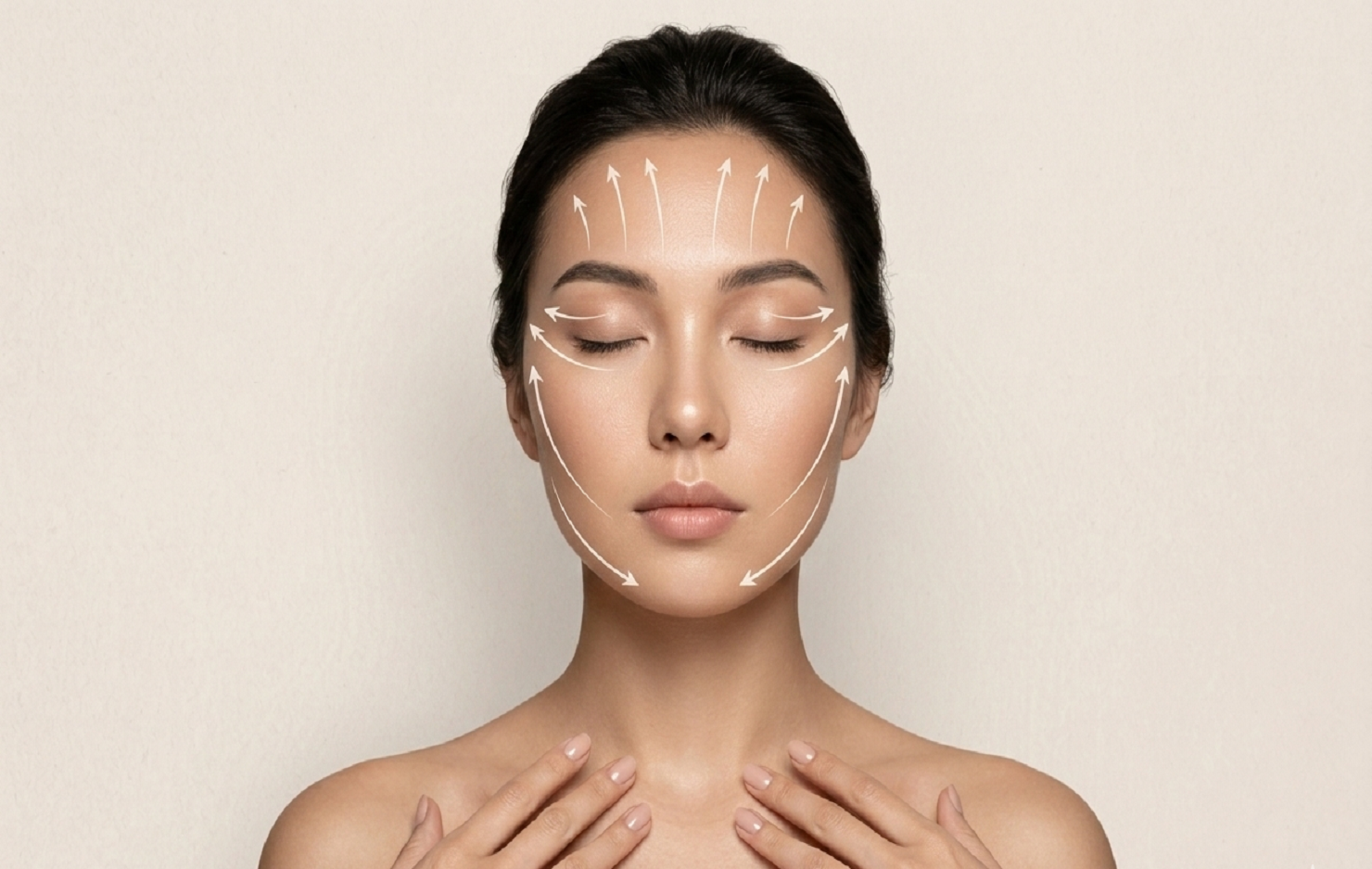
Not every patient who enquires about facial rejuvenation surgery is a good fit for a limited-incision technique. Suitability depends on anatomy, skin quality, age-related tissue changes, and—just as importantly—what the patient hopes to achieve. A ponytail facelift in Dubai is often marketed as a minimally invasive alternative to a full facelift, but the term covers a narrower surgical reality than many people assume. This article examines candidacy from a clinical perspective, including the features that favour this approach, the situations where it may fall short, and how a proper assessment is carried out.
Ponytail Facelift in Dubai: The Anatomical Features That Matter
Facial aging involves several distinct processes: skin laxity, loss of volume, descent of soft tissue compartments, and bone remodelling. A limited-incision lift primarily addresses laxity and mild tissue descent in the lower face and jawline. Patients whose primary concern is mild jowling, early marionette lines, or a softening jawline often fall into the group that may benefit.
Skin quality is another consideration. Thicker skin with reasonable elasticity tends to respond more predictably to tissue repositioning, while very thin or heavily sun-damaged skin may behave differently during healing. During assessment, a clinician typically evaluates skin thickness, underlying fat distribution, and the position of deeper supporting structures before recommending any technique.
It is worth stating plainly that a ponytail facelift in Dubai is not designed for patients with advanced aging changes. Significant neck laxity, pronounced mid-face descent, and heavy tissue redundancy usually call for a more extensive approach.
Ponytail Facelift in Dubai: Age, Expectations, and Lifestyle Factors
Age alone does not determine candidacy, but the pattern of aging that tends to appear in a patient's late thirties to early fifties often aligns well with limited-incision techniques. Patients in this range frequently present with mild to moderate laxity rather than severe redundancy, which is the profile this procedure is generally intended to address.
Expectations matter enormously. Patients who want a subtle, refreshed improvement and accept that the result will not be dramatic are often more satisfied than those seeking a complete transformation. In our clinical experience, the most successful candidates are those who understand the procedure's scope and do not expect it to correct concerns it was never designed to address.
Lifestyle factors also influence planning. Smoking, uncontrolled diabetes, and certain medications can affect wound healing and are typically reviewed during consultation. A patient's general health and willingness to follow aftercare instructions are part of the suitability picture, not an afterthought.
Ponytail Facelift in Dubai: When a Different Procedure May Be Better
Honest surgical advice sometimes means recommending against a particular technique. Patients with substantial volume loss may benefit more from fat grafting or volume restoration combined with lifting. Those with significant neck aging may need a procedure that addresses the platysma and neck contour more directly. Deep-plane techniques may be more appropriate where ligamentous support has weakened considerably.
A ponytail facelift in Dubai should not be chosen simply because it sounds less invasive. The right procedure is the one that matches the patient's anatomy and goals, even if that means a longer recovery or a more extensive operation. Patients should feel comfortable asking why a specific technique is being recommended and what alternatives exist.
The Consultation Process and What It Involves
A proper consultation is a clinical evaluation, not a sales pitch. The clinician typically reviews medical history, examines facial anatomy in repose and animation, and discusses goals in detail. Photographs may be used for documentation and planning. Patients should expect a candid conversation about limitations as well as benefits.
Questions worth raising include the surgeon's experience with limited-incision techniques, the expected extent of correction, the plan for managing complications, and what revision options exist if results fall short. A clinic that welcomes these questions is usually a better sign than one that avoids them.
Tajmeels Clinic in Dubai approaches candidacy assessment with an emphasis on individualized planning and safety, recognising that not every patient is suited to every technique. That kind of honest evaluation is central to responsible surgical practice.
Making an Informed Decision
Suitability for a ponytail facelift in Dubai comes down to a careful match between anatomy, expectations, and surgical technique. If you have mild to moderate lower-face laxity, realistic goals, and good general health, this approach may be worth discussing. If your concerns extend beyond what a limited-incision lift can address, a different plan may serve you better. Either way, the decision should follow a thorough clinical assessment rather than marketing claims or online testimonials.
Ready to Begin Your Transformation?
Get in touch with us today to explore exclusive offers and find the right treatment for you!
WhatsApp: +971 56 203 8751
Phone: +971 4 373 9000
Social Media: