
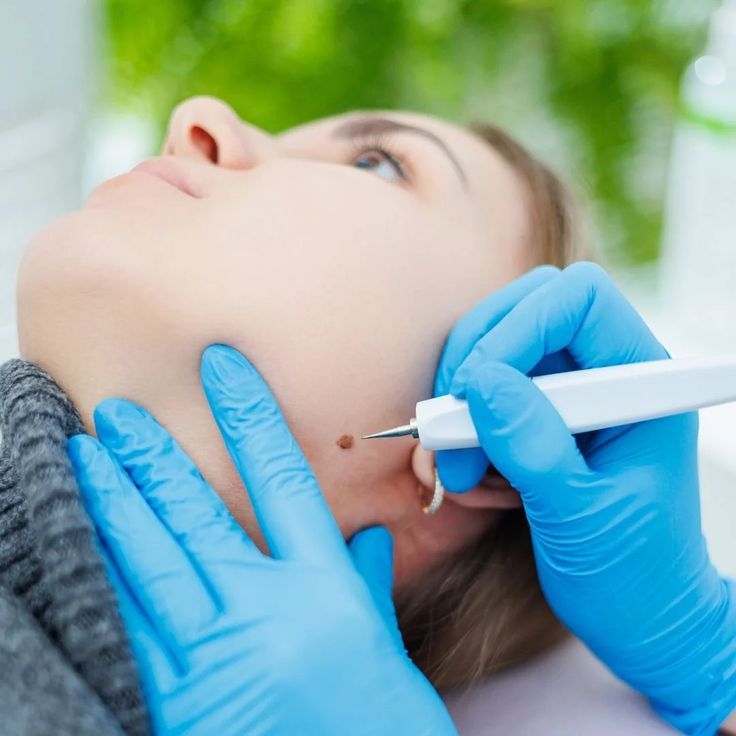
Not every mole needs to be removed, and that distinction matters more than many patients realise. Some spots are purely cosmetic concerns; others deserve prompt clinical attention. If you have been searching for guidance on mole removal in Dubai, the most useful starting point is not cost or technique but a simpler question: does this mole actually need treating? This article explains when removal is medically indicated, when observation is reasonable, and how clinicians separate cosmetic preference from clinical necessity — so you can approach a consultation with realistic expectations.
When a Mole Becomes a Medical Concern
Most moles are benign collections of melanocytes that develop during childhood and early adulthood. They may darken with sun exposure, lighten with age, or slowly change shape over decades. Those gradual, predictable changes are usually unremarkable.
Clinical concern arises when a mole deviates from its own established pattern. Clinicians commonly apply the ABCDE framework:
- A — Asymmetry: one half does not match the other
- B — Border: irregular, blurred, or notched edges
- C — Colour: multiple shades, or new darkening within one lesion
- D — Diameter: larger than around 6mm, though smaller lesions can still warrant review
- E — Evolution: any change in size, shape, colour, elevation, or new symptoms
Symptoms matter too. A mole that bleeds spontaneously, itches persistently, crusts, or fails to heal should be assessed rather than watched. These features do not confirm a problem, but they justify professional examination.
Mole Removal in Dubai: Separating Cosmetic Wants From Clinical Needs
Many patients seek removal for reasons unrelated to health: a mole catches on a bra strap, sits awkwardly when shaving, or affects confidence in photographs. These are legitimate concerns, and cosmetic removal is a reasonable choice when the lesion is clinically benign.
The distinction clinicians make is between removing a mole because it looks troublesome and removing one because it needs diagnosis. When there is any diagnostic uncertainty, the mole should be excised intact and sent for laboratory analysis rather than destroyed with laser or cautery. Destroying tissue removes the very sample that could confirm what the lesion was.
In our clinical experience, patients often assume a quick laser session is the modern, preferable option. Sometimes it is. But when a clinician recommends excision with histology instead, that recommendation usually reflects caution rather than inconvenience.
What Happens During a Medical Assessment
A consultation is not simply a visual glance. The clinician will typically:
- Take a history — when the mole appeared, how it has behaved, sun exposure, family history of skin cancer
- Examine the lesion under bright light, often with a dermatoscope
- Compare it with your other moles to identify the "odd one out"
- Decide whether monitoring, cosmetic removal, or diagnostic excision is appropriate
Dermatoscopy reveals pigment patterns and vascular structures invisible to the naked eye. This is one reason photographs and phone images cannot substitute for an in-person review — they capture surface appearance only.
If the clinician is uncertain, they may recommend excision for histological confirmation, or refer you onward for specialist review. Neither outcome means something is wrong; both mean the assessment was thorough.
Mole Removal in Dubai: Who Should Not Rush Into Treatment?
Removal is not automatically the right answer. Situations where caution or delay may be appropriate include:
- Moles in cosmetically sensitive areas such as near the eyelid margin, where technique and timing deserve careful planning
- Patients with keloid or hypertrophic scarring tendencies, where the scar may be more noticeable than the original mole
- Multiple atypical moles, where removal of one does not address the broader monitoring picture
- Purely cosmetic lesions in patients who have not considered scarring trade-offs
A responsible clinician will discuss these trade-offs openly rather than defaulting to removal because a patient asked.
The Role of a Qualified Clinic
Appropriate patient selection is the foundation of safe mole treatment. At Tajmeels Clinic in Dubai, assessment begins with determining whether a lesion requires diagnostic excision, cosmetic removal, or simply continued observation — and explaining that reasoning clearly. A clinic that treats every mole the same way, without examining it properly or discussing histology where relevant, is not providing the standard of care this procedure deserves.
Questions That Clarify Necessity
Before agreeing to any procedure, ask:
- Is this mole clinically concerning, or is removal cosmetic?
- Will the tissue be sent for laboratory analysis?
- What would happen if we simply monitored it instead?
- What scarring should I expect, and is that acceptable to me?
- Who will review the results, and when?
Clear answers to these questions tell you a great deal about how a clinic thinks.
Final Thoughts
Medical necessity is not a yes-or-no label attached to a mole at birth; it is a clinical judgement based on appearance, behaviour, history, and symptoms. Many moles never need removal. Some clearly do. Most sit somewhere in between, where a proper examination provides the clarity that internet searches cannot. If you are unsure which category your mole falls into, that uncertainty is itself a good reason to have it looked at professionally — and to feel comfortable asking why any recommended treatment is being advised.
Ready to Begin Your Transformation?
Get in touch with us today to explore exclusive offers and find the right treatment for you!
WhatsApp: +971 56 203 8751
Phone: +971 4 373 9000
Social Media: