
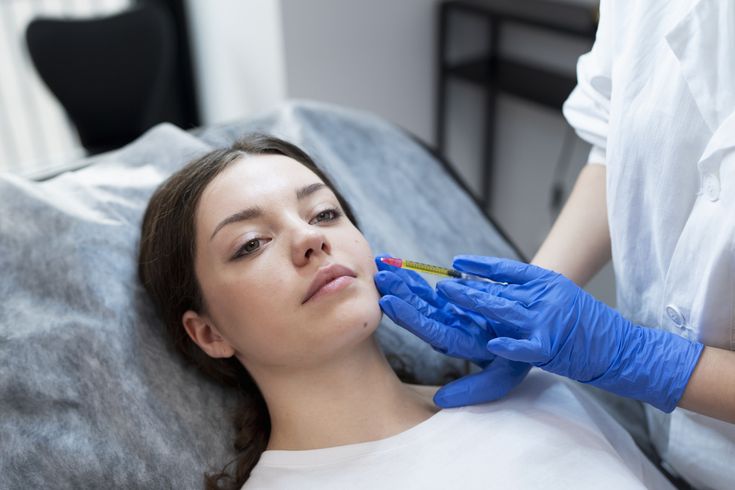
Aesthetic consultations work best when the patient arrives with context rather than hope alone. Laxity around the jawline and neck rarely has a single obvious solution, and the gap between marketing claims and clinical reality is widest in minimally invasive lifting. Knowing what Endolift in Dubai involves — the mechanism, the realistic limits, the questions that expose an unprepared provider — gives you a firmer footing before you sit down in a clinic. This guide covers the practical knowledge that tends to matter most in that first conversation.
The Underlying Mechanism, Stated Plainly
Endolift delivers controlled laser energy through a fine optical fibre placed beneath the skin. The thermal effect is thought to stimulate new collagen formation and encourage contraction of existing fibres, which may gradually improve firmness. It is a structural treatment aimed at laxity, not a resurfacing treatment aimed at texture, pores, or pigmentation.
That distinction shapes everything that follows. A patient worried about dullness or uneven tone is closer to a different modality entirely, while someone noticing early heaviness along the jaw is nearer the intended profile. Getting this clear early prevents a mismatch that no amount of goodwill can fix after the fact.
Who Tends to Do Well
Candidacy is best understood in degrees rather than absolutes. Patients with mild to moderate laxity and reasonable skin quality are typically the group where this approach is discussed. If the concern is visible only in certain lighting or photographs, you are likely in the right territory. If others regularly comment on facial heaviness, surgical assessment usually offers more.
Points that deserve an explicit conversation include:
- Active infection or inflammation in the treatment area
- Bleeding disorders or selected autoimmune conditions
- Pregnancy or breastfeeding
- A history of keloid scarring or poor healing
- Expectations of a facelift-level transformation
Each of these is a prompt for discussion, not an automatic exclusion. What matters is that the clinician raises them rather than waiting for you to ask.
Questions That Reveal a Thorough Clinic
The consultation carries most of the value, and a prepared list helps you assess whether the provider is genuinely careful. Worth asking:
- How many of these procedures have you personally performed, and over what period?
- What specific training did you complete for this device?
- Which areas would you treat for me, and which would you decline?
- What alternatives should I weigh, including no treatment at all?
- Which side effects do you see most often in your own practice?
- What happens if the result falls short of what we discussed?
A clinician who answers these directly, without irritation or vagueness, is generally a safer choice than one who redirects to pricing or promotions. Hesitation around credentials is information worth acting on.
What the Procedure Does Not Deliver
Responsible care includes saying clearly what a treatment cannot do. Endolift in Dubai is not designed to remove excess skin, reposition deeper facial structures, or restore lost volume. It does not replicate the mechanical effect of a surgical lift, and repeated sessions do not accumulate into one over time.
Patients sometimes ask whether a series of sessions can substitute for surgery. Repetition may support maintenance of firmness, but it does not excise or lift tissue. A clinician should state this plainly rather than implying otherwise to secure a booking — and the willingness to talk you out of an unsuitable treatment is itself a quality signal.
Practical Preparation
Most preparation is simple. You may be asked to pause certain blood-thinning supplements for a period beforehand, but only under medical guidance — never stop a prescribed medication independently. Arriving with clean skin and minimal makeup keeps the session straightforward.
It also helps to plan the following days sensibly. Downtime is usually limited, but scheduling a significant public event immediately afterwards is unwise. Most patients find a quiet day or two makes the experience more comfortable, and a little planning reduces the temptation to rush back into a full schedule.
The Provider Question in Endolift in Dubai
Identical technology produces different experiences depending on the hands operating it. Technique, energy settings, patient selection, and aftercare all rest with the provider, and none of these appear on a price list. During consultation at Tajmeels Clinic in Dubai, the conversation is structured around individual anatomy and goals, with a clear account of what the procedure can reasonably achieve in your case.
Facility standards, hygiene protocols, and consent processes also vary. Asking about them directly is not confrontational; it is what informed patients do, and reputable clinics anticipate it. If a provider seems unsettled by the question, that reaction tells you something useful.
Framing the Decision
Three questions are worth sitting with before you commit: does your concern match what the procedure genuinely does well, has the provider shown both competence and honesty, and does the overall commitment — sessions, recovery, cost, follow-up — fit your life? If any answer feels shaky, waiting costs you little. Aesthetic treatment rarely carries clinical urgency, and a second opinion is often clarifying.
Arriving informed does not mean arriving decided. It means you understand the mechanism, the likely outcomes, the risks, and the boundaries well enough to ask meaningful questions. That understanding is what separates a considered decision from an impulse one, and it is the most useful thing you can carry into a first appointment.
Ready to Begin Your Transformation?
Get in touch with us today to explore exclusive offers and find the right treatment for you!
WhatsApp: +971 56 203 8751
Phone: +971 4 373 9000
Social Media: